Podcast
Privacy Holding: Product Team Implications
Technology lawyers and in-house privacy counsel
Law firms and in-house legal teams use the AutoContent API to compress dense legal content — case law, regulatory updates, client memos, deposition transcripts — into audio briefings attorneys consume between meetings. Same source, multiple formats: an audio brief for the commute, a slide deck for the partner meeting, an infographic for the client update.
The players and previews below use completed AutoContent API jobs for this industry, including the returned media URLs, hosted share pages, and quiz JSON.
Technology lawyers and in-house privacy counsel
Struggling to get busy attorneys to actually consume long opinions, regs, and deposition transcripts? This video walks through a simple, non-technical workflow that turns one dense legal source into a suite of ready-to-use, context-specific assets so your team spends minutes, not hours, getting the intelligence they need. The process is straightforward, practical, and designed for law firms and compliance teams. Feed in the original document, let the workflow convert the material, and get multiple polished outputs that match how people actually work and absorb information. Same source, multiple formats, no extra drafting. Real-world scenarios and outputs covered in the video: - Privacy case opinions, transformed into a 10-minute attorney audio brief organized by holding, reasoning, a...
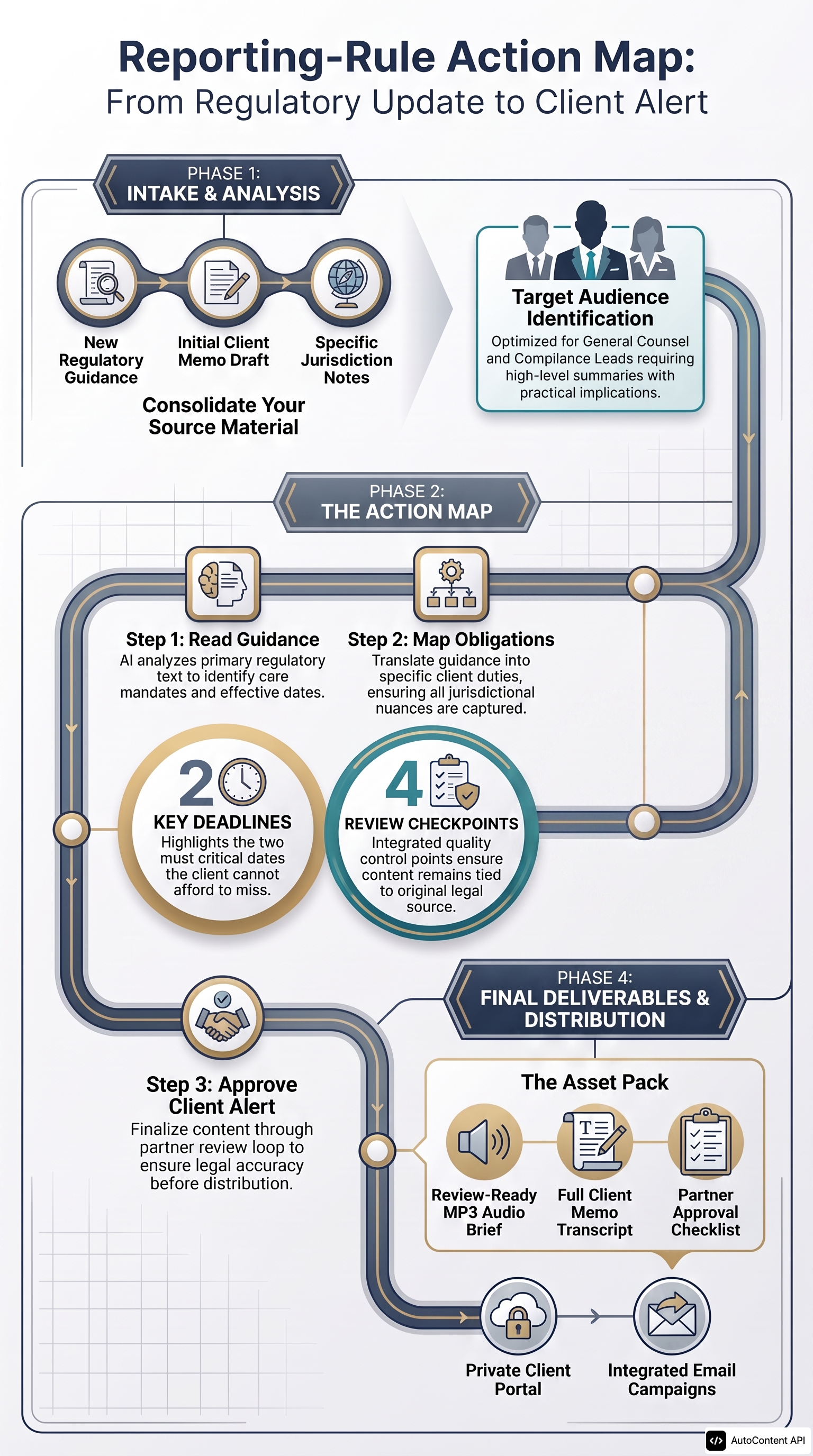
These are the kinds of outputs the API can generate from existing source material, with the audience, deliverables, and publishing path made explicit.
Published appellate opinion and partner margin notes
The hosts walk through the holding, explain the court reasoning in plain English, and preserve the citation before discussing practical policy implications.
New regulatory guidance, client memo draft, and jurisdiction notes
The generated narrator states the effective date, explains the first operational deadline, and keeps risk language tied to the original guidance instead of adding new claims.
Deposition transcript, exhibit list, and case-team issue map
The recap isolates confirmed admissions, open inconsistencies, and exhibit references, then closes with three follow-up questions for the next prep meeting.
The workflow is designed for teams that already have source material and need publishable audio or multi-format content without rebuilding their process.
Send the API the legal documents, URLs, transcripts, tables, or feeds your team already uses.
Create audio, transcripts, slides, infographics, or short-form scripts from the same approved source.
Use the transcript and source-preserving structure for compliance, editorial, academic, or subject-matter review.
Route finished files into portals, LMSs, CRMs, newsletters, podcast feeds, or campaign systems.
Convert published opinions into 10-minute audio briefings covering the holding, reasoning, and practical implications.
Turn a new regulation or guidance into a client-facing audio update with practical compliance implications.
Compress depositions into audio summaries for case-team review — useful for large litigation with many witness sessions.
Convert internal newsletters and KM updates into audio briefings partners actually finish.
For privileged client content, deploy in private mode and serve audio behind your auth. The API processes only the data you submit; there is no auto-fetching or third-party storage of private content beyond the duration of generation.
Yes — citations are read by case name and reporter rather than as URLs or string references. For unusual abbreviations, provide a glossary.
Most firms use it for internal briefings and partner education first. For client-facing content, review the output the same way you would review a memo before distribution — same compliance bar.
50+ languages. Common workflow: generate the source content in English once, request parallel output in client languages.
Start with one approved source and generate the audio, transcript, and supporting formats your team can review and distribute.