Podcast
AFib Update: What Changes on Rounds
Hospitalists, residents, and clinical pharmacists
Healthcare teams use the AutoContent API to compress dense clinical content — guideline updates, research summaries, formulary changes, patient education — into audio briefings clinicians and patients consume on the move. Same source, multiple formats: a podcast for the commute, a slide deck for grand rounds, an infographic for the patient-facing portal.
The players and previews below use completed AutoContent API jobs for this industry, including the returned media URLs, hosted share pages, and quiz JSON.
Hospitalists, residents, and clinical pharmacists
Struggling to get clinicians and patients to read essential but dense clinical documents? This video shows a simple, nontechnical workflow that turns a single source document into a full set of human-friendly assets your teams will actually use. Think of it like an intelligent vending machine, drop in a guideline or discharge packet, and out comes audio briefings, short videos, one-page infographics, slide decks, quizzes, transcripts, and QR-enabled patient materials. No technical skills required for your clinical staff. Practical examples covered in the video include transforming an atrial fibrillation guideline into a podcast with chapters and grand rounds slides, converting diabetes discharge instructions into a patient audio explainer, checklist, and comprehension quiz, and turning a ...
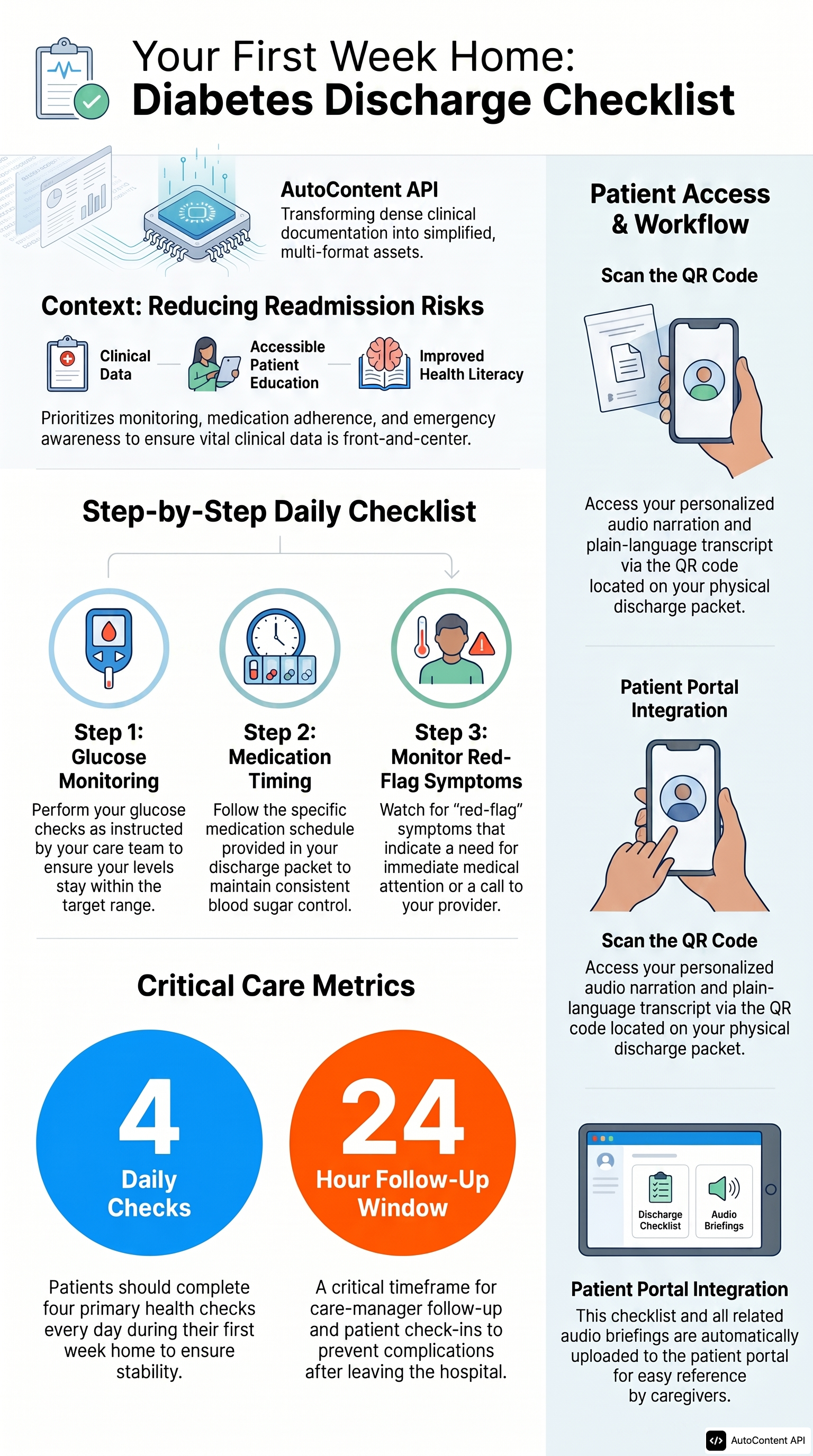
These are the kinds of outputs the API can generate from existing source material, with the audience, deliverables, and publishing path made explicit.
Updated atrial fibrillation guideline, formulary note, and hospital policy memo
The first host states the guideline change, the second host asks how it affects discharge planning, and the recap preserves the original evidence grade before any recommendation.
Diabetes discharge instructions, medication schedule, and diet handout
The narrator explains when to check glucose, what symptoms require a call, and why the medication schedule matters, using everyday language rather than clinical shorthand.
Weekly clinical newsletter and shift-handoff notes
The update prioritizes staffing changes, medication storage reminders, and a new infection-control note, then closes with the one action required before the weekend.
The workflow is designed for teams that already have source material and need publishable audio or multi-format content without rebuilding their process.
Send the API the healthcare documents, URLs, transcripts, tables, or feeds your team already uses.
Create audio, transcripts, slides, infographics, or short-form scripts from the same approved source.
Use the transcript and source-preserving structure for compliance, editorial, academic, or subject-matter review.
Route finished files into portals, LMSs, CRMs, newsletters, podcast feeds, or campaign systems.
Convert peer-reviewed papers into 10-minute discussion podcasts for journal-club and CME use.
Turn each guideline change into a short audio briefing for clinical staff — distributed via internal feed or email.
Generate audio narration plus a one-page infographic from the same patient handout for accessibility and clarity.
Convert clinical newsletters into audio digests staff can listen to during shifts or commutes.
Compliance depends on how you deploy and what data you submit. For PHI-containing content, contact sales about Business Associate Agreements (BAAs) and deployment options. For non-PHI content (research papers, public guidelines, marketing), standard API terms apply.
The API preserves source terminology — the script reads what the source says. For pronunciation of unusual drug names or anatomical terms, provide a glossary in the API call.
Yes — the script preserves citations and reads "according to [source]" rather than restating data as fact. This matters for evidence-based content where attribution is non-negotiable.
50+ languages on input and output. Common workflow: generate the source content once, request output in 5–10 languages, distribute through patient portals in each.
Start with one approved source and generate the audio, transcript, and supporting formats your team can review and distribute.