Podcast
Voice Tour: 2148 Maple Avenue
Buyers browsing listings on mobile
Brokerages, MLSs, and real-estate fintech teams use the AutoContent API to turn property data and market intelligence into audio and video at scale. Every listing gets a voice tour. Every market report becomes a podcast for clients. Every neighborhood guide becomes a video for the social feed. One data feed, ready-to-distribute multimedia.
The players and previews below use completed AutoContent API jobs for this industry, including the returned media URLs, hosted share pages, and quiz JSON.
Buyers browsing listings on mobile
See how boring MLS spreadsheets turn into the short videos, audio tours, and market briefs that actually help buyers make decisions. In this video I walk through the simple three-step workflow that transforms raw listing and market data into polished, mobile-first content, with real examples you can relate to. You will learn how two-minute neighborhood guides, 90-second listing voice tours, and bite-size market briefs are made, and why that matters if you are relocating, shopping on the go, or trying to understand your home's value. What you will see in plain language: - A two-minute Living in West Loop neighborhood guide, perfect for busy relocation buyers. - A 90-second voice tour for 2148 Maple Avenue you can listen to while swiping listings or via a QR code on a yard sign. - The North County Market Pulse as a quick audio brief and an easy infographic instead of a dense PDF. - How one data feed produces six ready-to-use assets like a podcast, social short, infographic, and CMA slide deck. This video is about saving time, getting clearer insight, and making property information actually enjoyable to consume. Watch through to the end for the quick quiz reveal that shows what a great audio tour should lead with. If this helped, like the video, subscribe for more real estate tech explainers, and tell me in the comments, would you rather start your search with a spreadsheet or a 90-second audio tour?
These are the kinds of outputs the API can generate from existing source material, with the audience, deliverables, and publishing path made explicit.
MLS listing feed with property facts, agent notes, and neighborhood highlights
The tour starts with the strongest room, moves through layout and commute details, and ends with the showing CTA without exaggerating unverified listing claims.
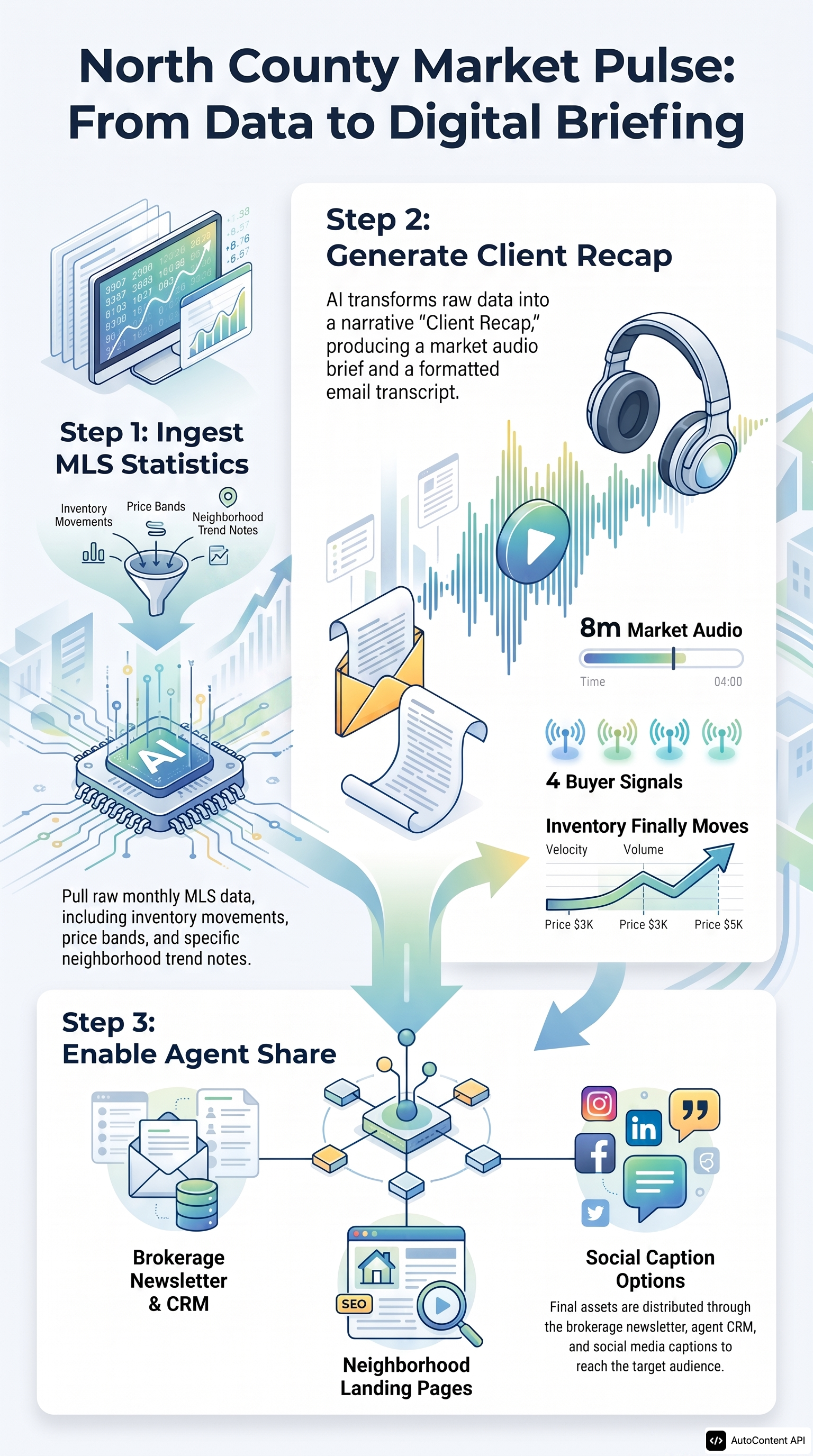
Monthly MLS statistics, price bands, and neighborhood trend notes
The generated host explains inventory, median price, and days-on-market changes, then translates the trend into buyer and seller next steps.
Neighborhood guide, school descriptions, commute data, and lifestyle notes
The script pairs amenity highlights with practical details: transit time, school considerations, weekend traffic, and who the neighborhood usually fits.
The workflow is designed for teams that already have source material and need publishable audio or multi-format content without rebuilding their process.
Send the API the real estate documents, URLs, transcripts, tables, or feeds your team already uses.
Create audio, transcripts, slides, infographics, or short-form scripts from the same approved source.
Use the transcript and source-preserving structure for compliance, editorial, academic, or subject-matter review.
Route finished files into portals, LMSs, CRMs, newsletters, podcast feeds, or campaign systems.
Convert listing descriptions into voice tours for buyers browsing on the move — with each property getting a 90-second audio walkthrough.
Generate quarterly market briefings from MLS data for brokerage-wide client distribution.
Convert neighborhood guides into Reels/Shorts-format videos for agent social feeds.
Turn comparative market analysis reports into audio briefings sellers actually listen to before pricing decisions.
Yes. The API supports batch processing and per-request pricing, which makes high-volume listing audio cost-predictable. Many MLSs run nightly batches across their entire inventory.
Re-run the API call on update — generation completes in minutes, so listing audio can stay in sync with price changes and status updates.
50+ languages. Common workflow for international-buyer brokerages: generate listings in English first, request parallel output in target buyer-market languages (Mandarin, Spanish, Russian, etc.).
Yes — voices, intros, outros, and tone are configurable. Many brokerages set up brand presets and apply them consistently across all generated content.
Start with one approved source and generate the audio, transcript, and supporting formats your team can review and distribute.