Podcast
Listen: Inside the City Budget Fight
Subscribers who use listen-later features
Digital newsrooms, magazines, and publishers use the AutoContent API to expand their distribution surface without growing the production team. Every article ships with an audio version. Every long-form feature becomes a video for social. Every newsletter gets an audio digest for podcast listeners. One newsroom, full multimedia distribution.
The players and previews below use completed AutoContent API jobs for this industry, including the returned media URLs, hosted share pages, and quiz JSON.
Subscribers who use listen-later features
Turn one article into a full multimedia distribution pack, without growing your team. This video shows a simple, nontechnical workflow newsrooms use to feed a single, fact checked story into an automated content engine and get back ready to publish audio, video, visuals, and interactive assets. It preserves your authors voice and editorial standards while multiplying reach and engagement. What you get from the same source text: - Audio: MP3s, onsite listen transcripts, and full podcast episodes with chapter markers and show notes. - Video: a narrated YouTube explainer, short-form social cuts, captions, and thumbnail copy ready for publishing. - Visuals and interactive: infographics mapped to key story beats, premium slide decks, and comprehension quizzes that protect attribution and ac...
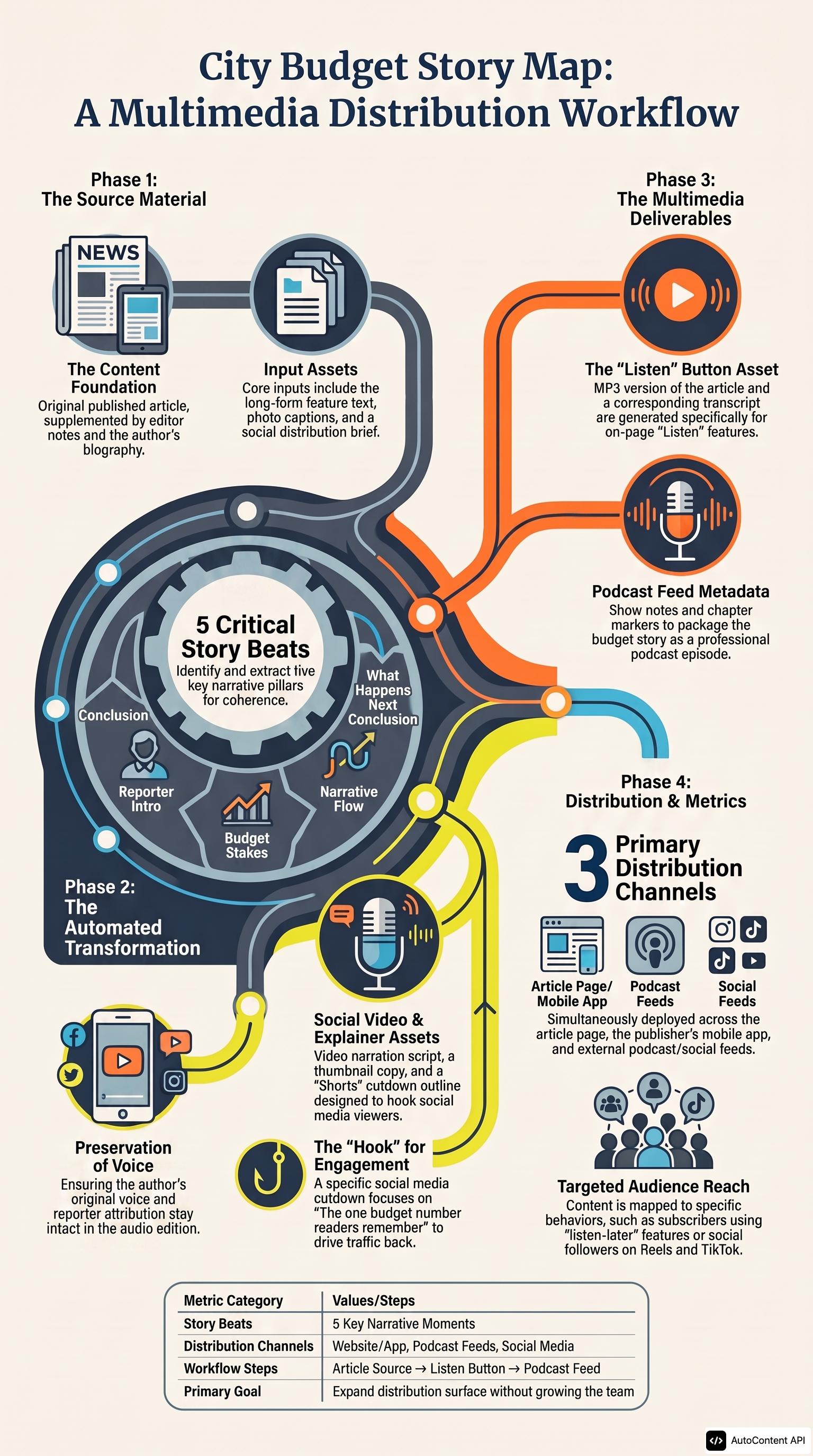
These are the kinds of outputs the API can generate from existing source material, with the audience, deliverables, and publishing path made explicit.
Published article, editor notes, and author bio
The narration preserves the article structure, introduces the reporter by name, and turns dense budget figures into an audio-friendly sequence.
Weekly newsletter, top five links, and editor intro
The generated host ranks the stories, gives each item context, and keeps the editor voice intact instead of flattening it into generic news copy.
Long-form feature, photo captions, and social distribution brief
The script opens on the human scene, uses captions as visual beats, and converts the reported chronology into a paced video narrative.
The workflow is designed for teams that already have source material and need publishable audio or multi-format content without rebuilding their process.
Send the API the media & publishing documents, URLs, transcripts, tables, or feeds your team already uses.
Create audio, transcripts, slides, infographics, or short-form scripts from the same approved source.
Use the transcript and source-preserving structure for compliance, editorial, academic, or subject-matter review.
Route finished files into portals, LMSs, CRMs, newsletters, podcast feeds, or campaign systems.
Convert every published article into an audio version for the on-page "Listen" feature — implemented across many major news sites already.
Turn investigative features and long reads into narrated videos for the publisher's YouTube channel.
Generate audio digests of weekly newsletters for distribution as a podcast feed alongside the email version.
Convert opinion columns into short-form social video versions with text overlays for Reels and Shorts.
The API preserves the source text — bylines, attributions, and authorial voice carry through to the audio version. It is not rewriting your journalism; it is reading it in a discussion or narration format.
The API returns an mp3 plus metadata that drops into your existing podcast hosting workflow. Many publishers ship a parallel podcast feed alongside the website.
50+ languages. Common pattern for international publishers: original article in English, parallel audio in the publication's target language markets.
Typical end-to-end time is under five minutes for a 1500-word article. Fine for daily news; tight for live-breaking events but workable with the right pipeline.
Start with one approved source and generate the audio, transcript, and supporting formats your team can review and distribute.