Podcast
Which Espresso Machine Fits a Small Kitchen?
Retargeted shoppers who viewed outerwear
E-commerce teams use the AutoContent API to turn product data into multi-format marketing creative at scale. Every SKU gets a voice ad. Every comparison gets a podcast review. Every category page gets a video summary. Programmatic creative across thousands of products without scaling the marketing team.
The players and previews below use completed AutoContent API jobs for this industry, including the returned media URLs, hosted share pages, and quiz JSON.
Retargeted shoppers who viewed outerwear
If you manage product catalogs and need more creative output without hiring an army, this video is for you. We walk through a no-code, factory-style workflow that turns the product data you already have into fully finished marketing assets at massive scale. Watch to see how a single SKU feed becomes simultaneously produced podcasts, audio ads, short videos, infographics, slide decks, and interactive quizzes. What you will learn in plain language, not technical detail: - Why manual content for thousands of SKUs is impossible for normal teams, and what “programmatic creative” actually looks like in practice. - How an automated content engine ingests your existing product and category data and outputs polished assets for every channel, without code or extra headcount. - Real examples yo...
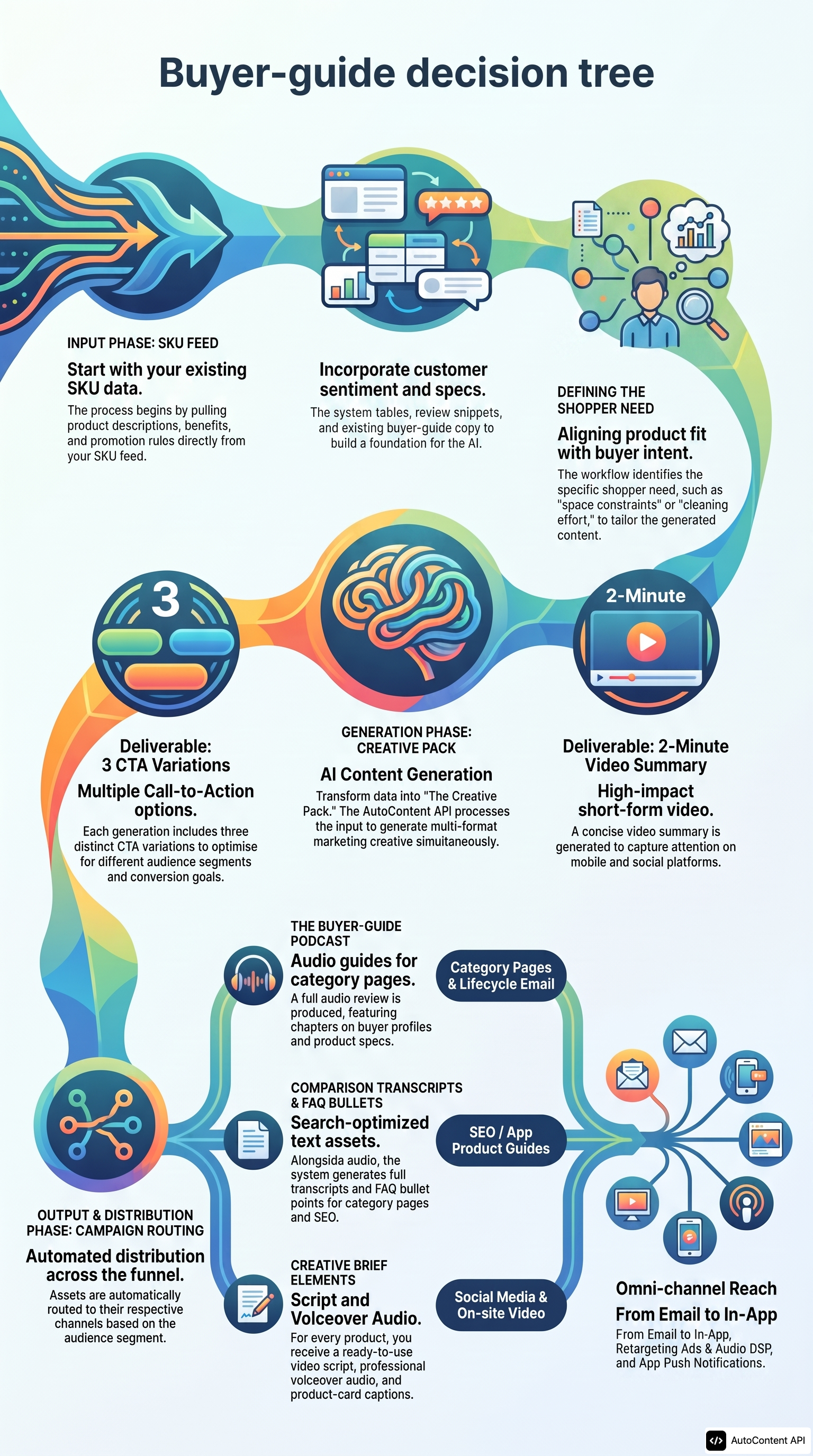
These are the kinds of outputs the API can generate from existing source material, with the audience, deliverables, and publishing path made explicit.
SKU feed with product description, benefits, reviews, and promotion rules
The spot leads with waterproof protection, mentions the current promotion only once, and closes with a direct category-page CTA suitable for audio ad platforms.
Product comparison table, review snippets, and buyer-guide copy
The hosts compare size, cleaning effort, and milk options, then name the shopper profile each product fits instead of declaring a single winner.
Seasonal landing page, featured products, and campaign creative brief
The generated script groups products by job-to-be-done, explains why each bundle matters, and avoids repeating the same discount language across every item.
The workflow is designed for teams that already have source material and need publishable audio or multi-format content without rebuilding their process.
Send the API the e-commerce documents, URLs, transcripts, tables, or feeds your team already uses.
Create audio, transcripts, slides, infographics, or short-form scripts from the same approved source.
Use the transcript and source-preserving structure for compliance, editorial, academic, or subject-matter review.
Route finished files into portals, LMSs, CRMs, newsletters, podcast feeds, or campaign systems.
Generate programmatic voice ads from product descriptions for podcast pre-roll, audio DSP, and dynamic retargeting creative.
Turn category comparisons into audio buyer guides for category-page audio and email content.
Convert category pages into short-form video summaries for social and on-site video assets.
Generate audio digests of marketing newsletters for in-app audio notifications and podcast distribution.
Yes. The API supports batch processing and per-request pricing, which makes very-high-volume product audio cost-predictable. Multi-million-SKU marketplaces typically run nightly batch jobs across the catalog.
Re-run the same product description with different voice, tone, and CTA parameters; the API returns each variation as a separate mp3 ready for ad-server routing.
50+ languages on input and output. The standard pattern: generate the source product description once in English, request parallel output in target market languages.
Yes — most retailers wire the API to their PIM update events so new products and inventory changes trigger fresh audio generation automatically.
Start with one approved source and generate the audio, transcript, and supporting formats your team can review and distribute.