
Content Library
Back to AutoContent APIPodcast
The Future of Work: UBI, Automation, and Human Purpose
Explore every generated asset for this topic, including the interactive quiz.
Listen to the generated episode and follow the full transcript.
Watch the generated explainer video for this topic.
Review the visual summary built for this content item.
Open the generated presentation deck for this topic.
Take the interactive quiz and check what you retained.
Podcast
Listen to the episode and open the generated transcript.

The Future of Work: UBI, Automation, and Human Purpose
This podcast delves into the impact of AI and automation on jobs, exploring both potential job displacement and the creation of new roles. It emphasizes the need for systemic solutions, like universal basic income, to address the profound socioeconomic challenges posed by these technological advances.
Transcript
Expand to read the dialogue for this episode.
Explainer Video
Watch the generated explainer for this episode.
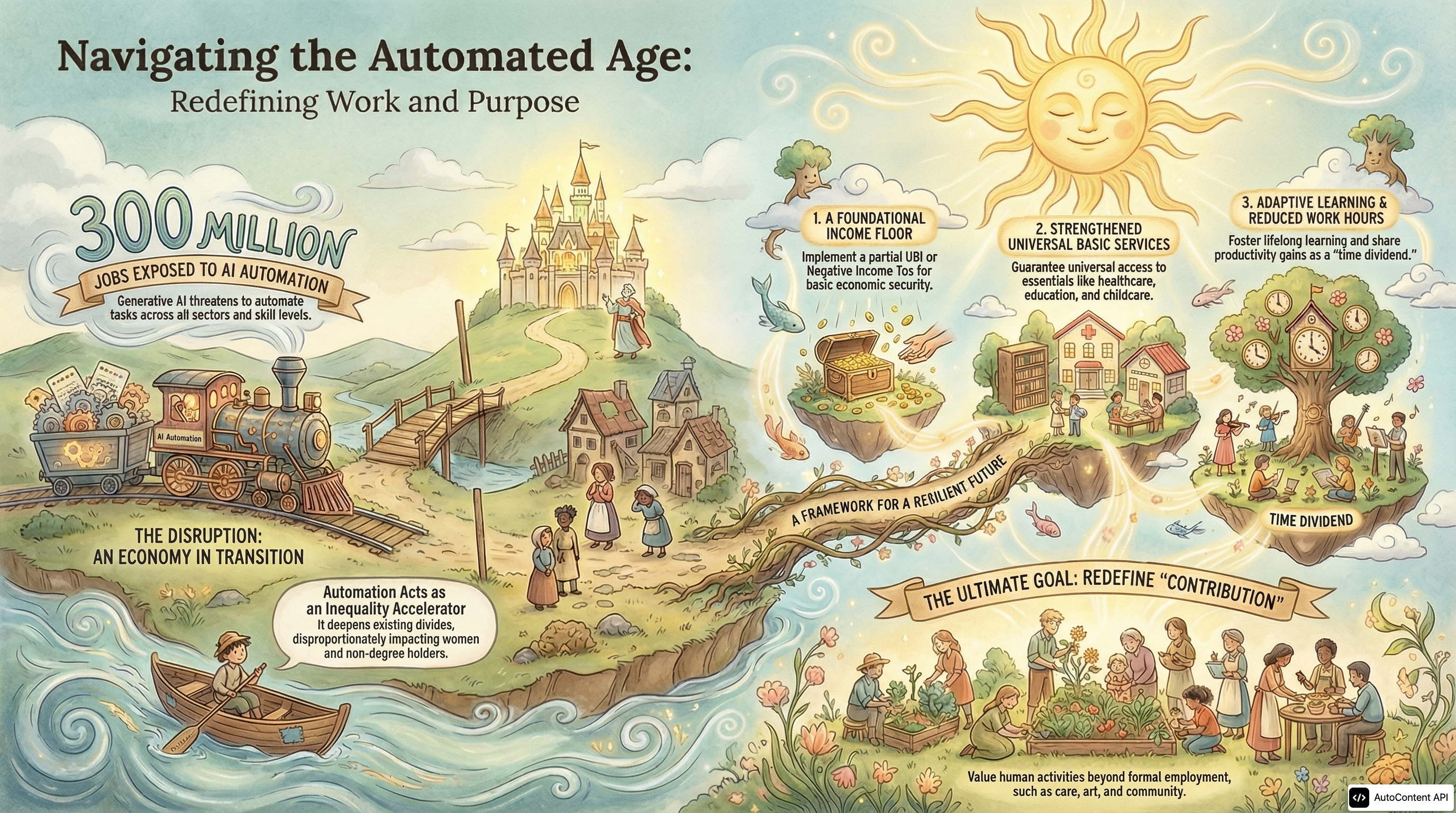
Infographic
Visual snapshot generated for this episode.
Slide Deck
Preview the generated deck for this episode.
Quiz
Test your understanding with the interactive quiz for this episode.
Quiz preview unavailable.
Open quiz in new tabStart creating podcasts from your existing content today
Transform your documents, articles, and research into engaging AI-generated podcasts.
More from Social Issues & Perspectives
View all →
Rethinking Education for the Digital Age
This podcast explores the transformative changes in education driven by technology, emphasizing the need for a fundamental rethinking of learning models and equity. Key insights highlight the shift towards durable skills and the importance of addressing the complex digital divide to foster meaningful learning experiences.

How Cities Are Evolving After the Pandemic
This episode explores how the COVID-19 pandemic has catalyzed significant shifts in urban life, leading to changes in where people choose to live and work. Key insights reveal a crucial internal reordering within cities, emphasizing the emergence of hybrid work and the growing importance of livability over economic density.

Gender Beyond the Binary: What it Means Today
This episode of The Deep Dive explores the complexities of non-binary identities, emphasizing their historical roots and the societal challenges faced today. Key insights reveal that the discrimination experienced by non-binary individuals stems from rigid societal frameworks rather than their identities themselves.
Contact Us
Have questions or feedback? We'd love to hear from you. Fill out the form below and we'll get back to you as soon as possible.